Cookbooks
Never Say Never to Dolce
A brand-new collection of 50 approachable homemade desserts – from iconic Cannoli to Dolci al Cucchiaio and more – that proves there’s always room for a little sweetness.
Manuela’s Sweet Temptations
A collection of 50 irresistible dessert recipes, from classic Italian treats to modern favorites—including gluten-free options.
The Complete Italian Cookbook: Essential Regional Cooking of Italy
A collection of 50 irresistible dessert recipes, from classic Italian treats to modern favorites—including gluten-free options.
Traditional Neapolitan Graffe (or Graffette) Italian Donuts
Here is the true and traditional recipe for these sinfully delicious Neapolitan graffe (also called graffette or ciambelle) Italian donuts, traditionally made during Carnival
Here is my recipe for these soft and light, lick-your-sugary-fingers delicious graffe (Italian fried “donuts”)… Just like the graffe you would find in a caffe’ in Napoli. Or almost like it;)

Graffe are donuts traditionally from Naples, that are eaten during Carnival all over Italy – together with other fried treats made this time of the year, like frittelle, chiacchiere and castagnole. You can find my recipes for these Italian desserts in the links.
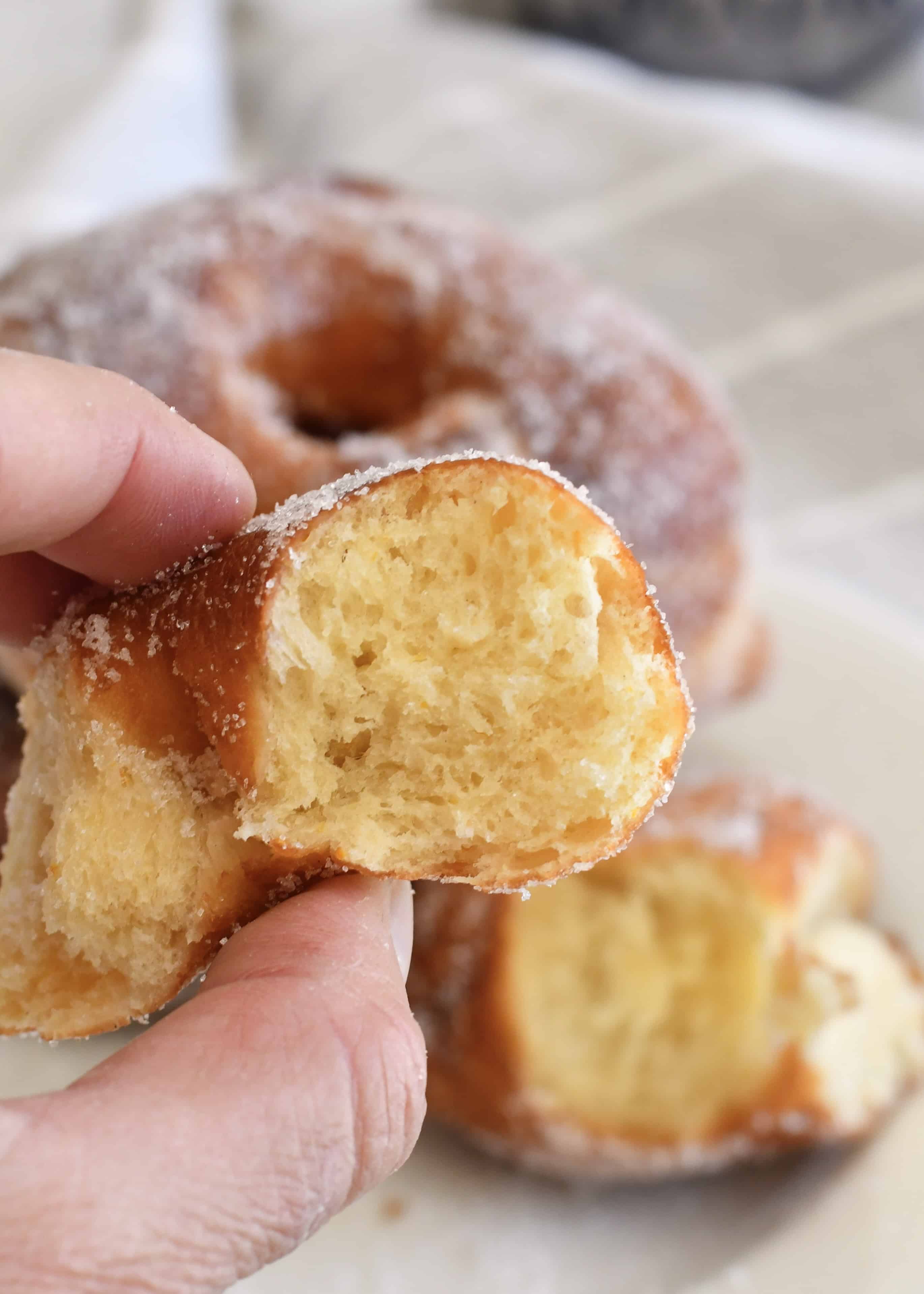
Graffe, also called graffette or ciambelle based on the region of Italy where they are found, are so good that you can find them not just this season, but all year around in most coffee shops everywhere in Italy.
Graffe, just like donuts, are generally served for breakfast or mid morning snack next to a hot espresso.
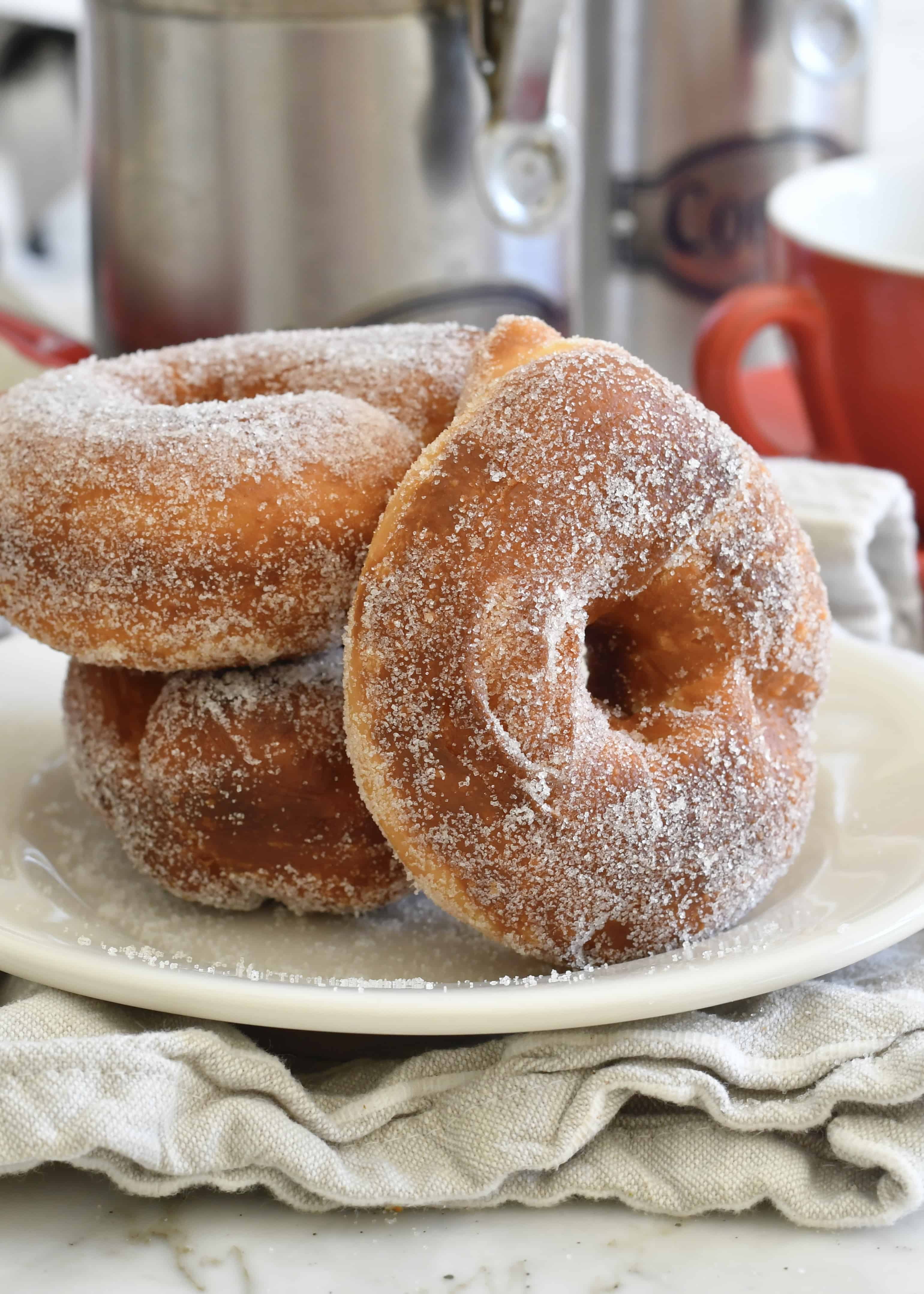
Some recipes for graffe ask for potatoes in the dough, but I believe that originally they are made without, like in the recipe I’m sharing with you today.
Without potatoes in the dough, graffe turn out lighter and more airy. And just as delicious!

If you have a stand mixer making the dough for these giraffe is quite simple. If you don’t have one, you can still do the recipe (by hand or hand mixer) but it just takes a bit more time to mix and knead.
For this recipe: add all the dough ingredients with the exception of salt and butter that is added at the end, and let the mixer do all the work.
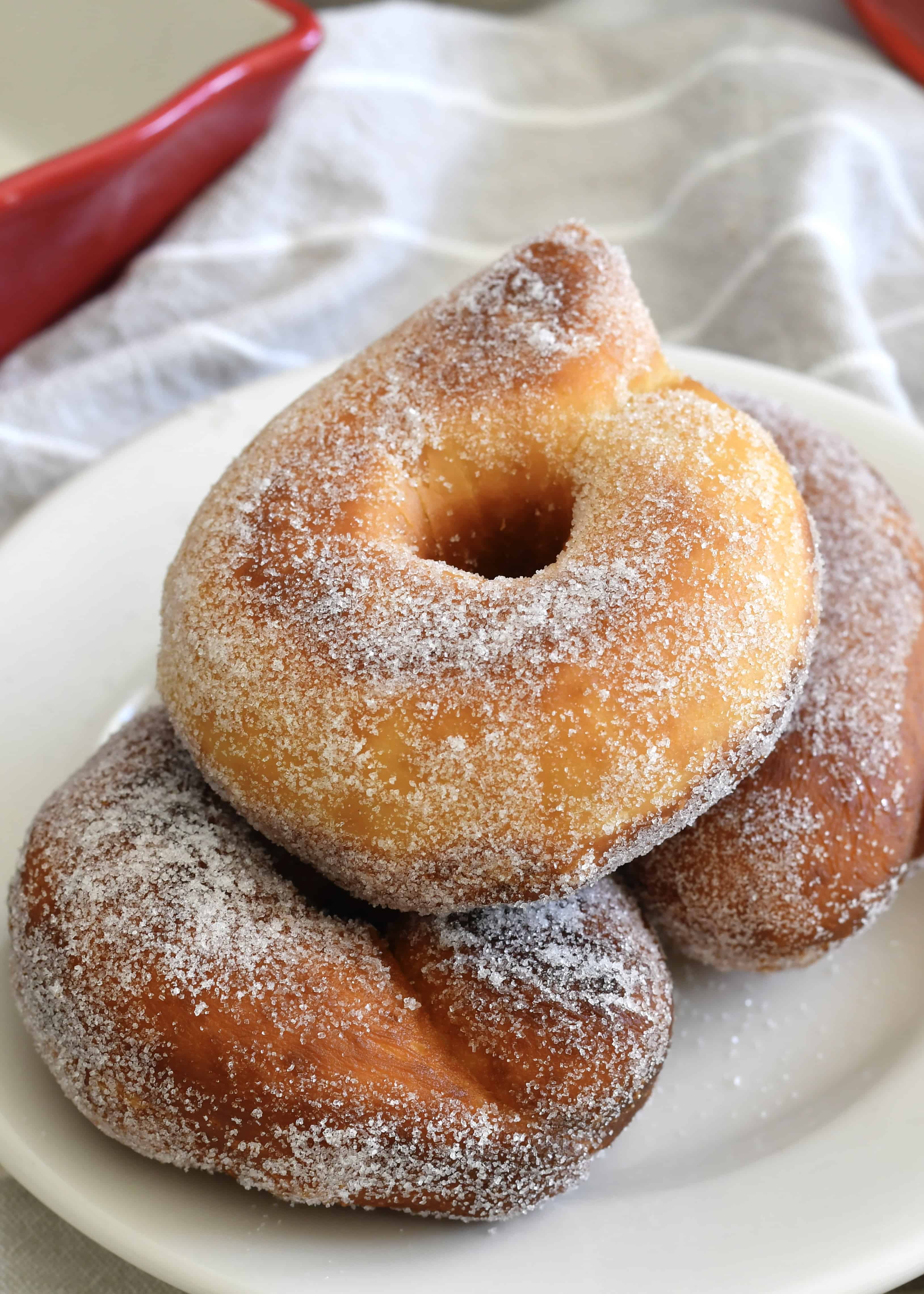
The secret to these light and airy donuts is to give plenty of time for the the dough to rise. First when you make the dough and a second rise when you shape into donuts.
I left my dough rise for a little over two hours in the oven (turned off!) with the light on, covered with a kitchen towel, so it’s warm and cozy.
The ideal temperature to make the dough rise is 70-82F. For colder temperature you will need a little longer for the dough to double in size.

Divide the dough into 12 balls, each should be about 75 gr. If you have a scale you can weight them out so they will all have the same size.
Roll each into a ball and then into a log. You can shape these in perfectly round donuts, or like I did and make graffe “intrecciate”.
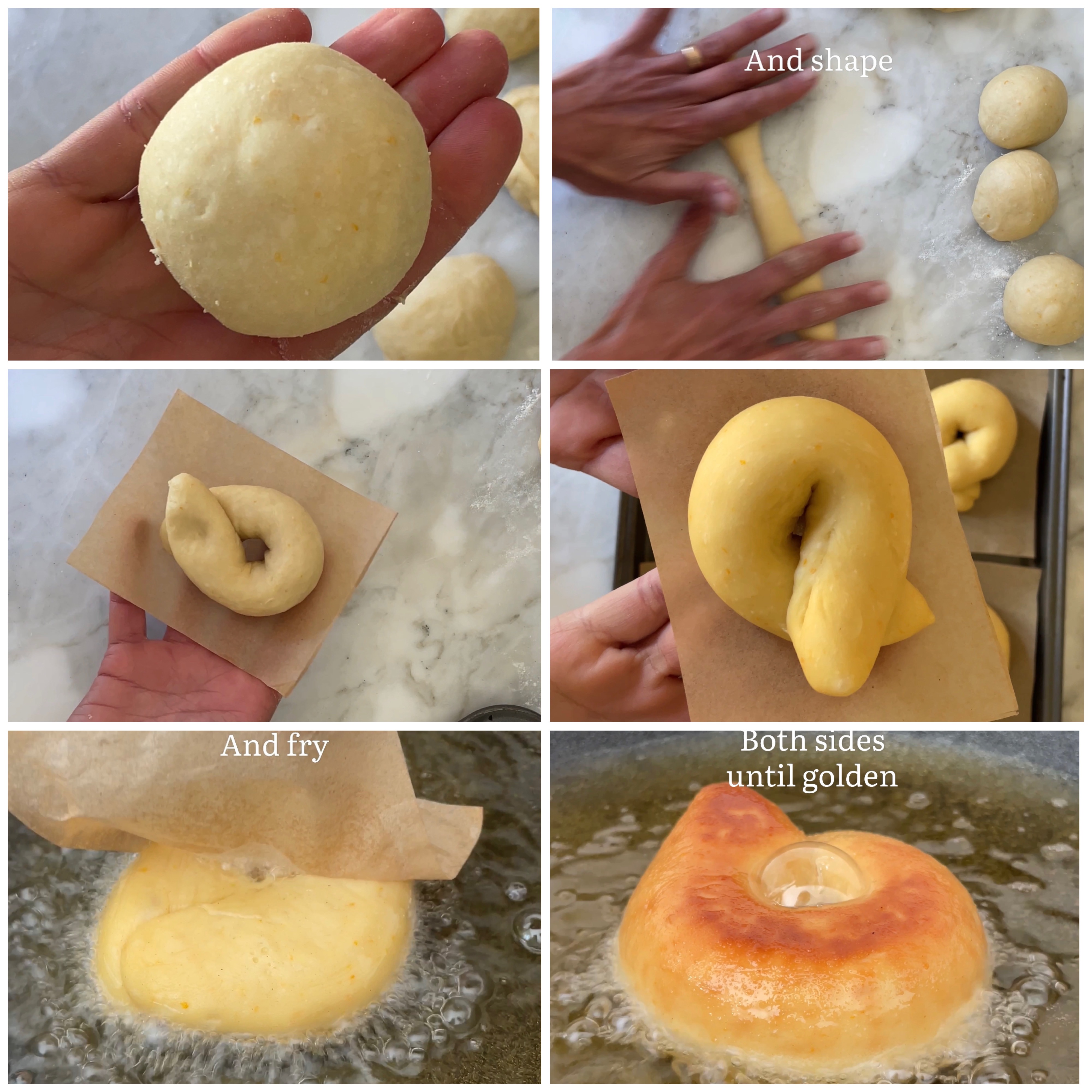
Place the donuts onto small squares of parchment paper. Each square a little bigger than the graffe.
Cutting the paper into smaller rectangles will be useful when frying. It will be easier to have each graffe on its own piece of paper to transfer into the hot oil without ruining the shape of the donuts.

Frying in the hot oil will only take around one minute on each side. Don’t crowd the pan, just cook 2 or 4 at a time, based on the size of your frying pan.
In the dough I use a tablespoon of rum (substitute with limoncello or similar) which will make the donuts absorb less oil when frying. Did you know this trick?!?
Drain on paper towel, roll in sugar when still hot and devour as soon as possible!
NOTE: these are best eaten as soon as they are cooked. If you make extra dough, simply store it in the refrigerator covered in plastic wrap until ready to fry. Leave at room temperature for at least one hour before frying.
Other Italian treats made during Carnival:
Traditional Neapolitan Graffe (or Graffette) Italian Donuts
Here is the true and traditional recipe for these sinfully delicious Neapolitan graffe (also called graffette or ciambelle) Italian donuts, traditionally made during Carnival
Servings:
12
Prep Time
20 min
Cook Time
10 min
Resting Time
Total Time
3 hr, 30 min
Ingredients
- 2 cups (250 gr) bread flour
- 2 cups (250 gr) all-purpose flour
- 1/4 cup (50 gr) sugar, plus more for dusting at the end
- 2 1/4 teaspoons (7 gr) active dry yeast
- zest of 1 orange (or lemon)
- 1/2 cup (120 ml) milk
- 1/4 cup (60 ml) water
- 2 eggs
- 1 teaspoon vanilla extract
- 1 tablespoon (15 ml) rum (limoncello or similar)
- 1 teaspoon (6 gr) salt
- 2 oz (65 gr) butter, soften
- oil to fry
Instructions
- In a stand-up mixer bowl, add the bread and all-purpose flour, sugar, yeast and orange zest. Mix to combine.
- In a small bowl add water, milk, eggs, vanilla extract and rum. Whisk to combine.
- Add the liquid to the dry ingredients and mix with the hook attachment for several minutes until the dough is smooth.
- Add the salt and the butter cut in pieces, some at a time while mixing. Mix for several minutes until the dough is smooth and detaches from the sides of the bowl.
- Make into a ball, lightly sprinkle with flour, and cover with a kitchen towel or plastic wrap. Let rise in a warm and draft-free space (inside the oven, turned off, with the light on) for at least 2 hours or until doubled in size.
- Move to the counter and cut into 12 pieces. Each should be about 75 gr. You can weight them to make them all the same size. Roll each into a ball. Roll into a rope and pinch the ends together to made the graffe shape.
- Place each graffe on a small piece of parchment paper (it will be easier to move and fry without ruining their shape). Place on a baking sheet and let rise inside the oven for one hour. You can either cover with plastic wrap or place a small glass of water inside the oven to avoid drying the top of the graffe.
- In a large frying pan, heat the oil over medium high heat (make sure not to fill more than half of the pan with oil). Test with a wooden spoon to see when the oil is hot enough (wait for bubbles around the spoon). Holding the graffe by the parchment paper, invert and gently place them in the hot oil. Remove the paper. Fry a few at a time depending on the size of your pan, until deep golden on both sides (about 2 minutes).
- Drain on paper towel and dip the graffe in granulated sugar on all sides when still warm. Serve hot!